
The Cicero in *Queen Margot*
An Exceptional Bookbinding
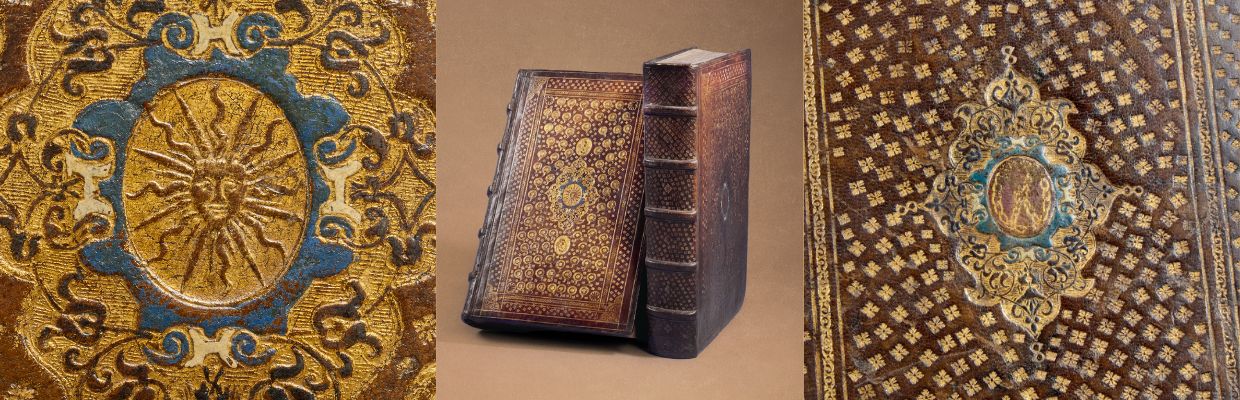
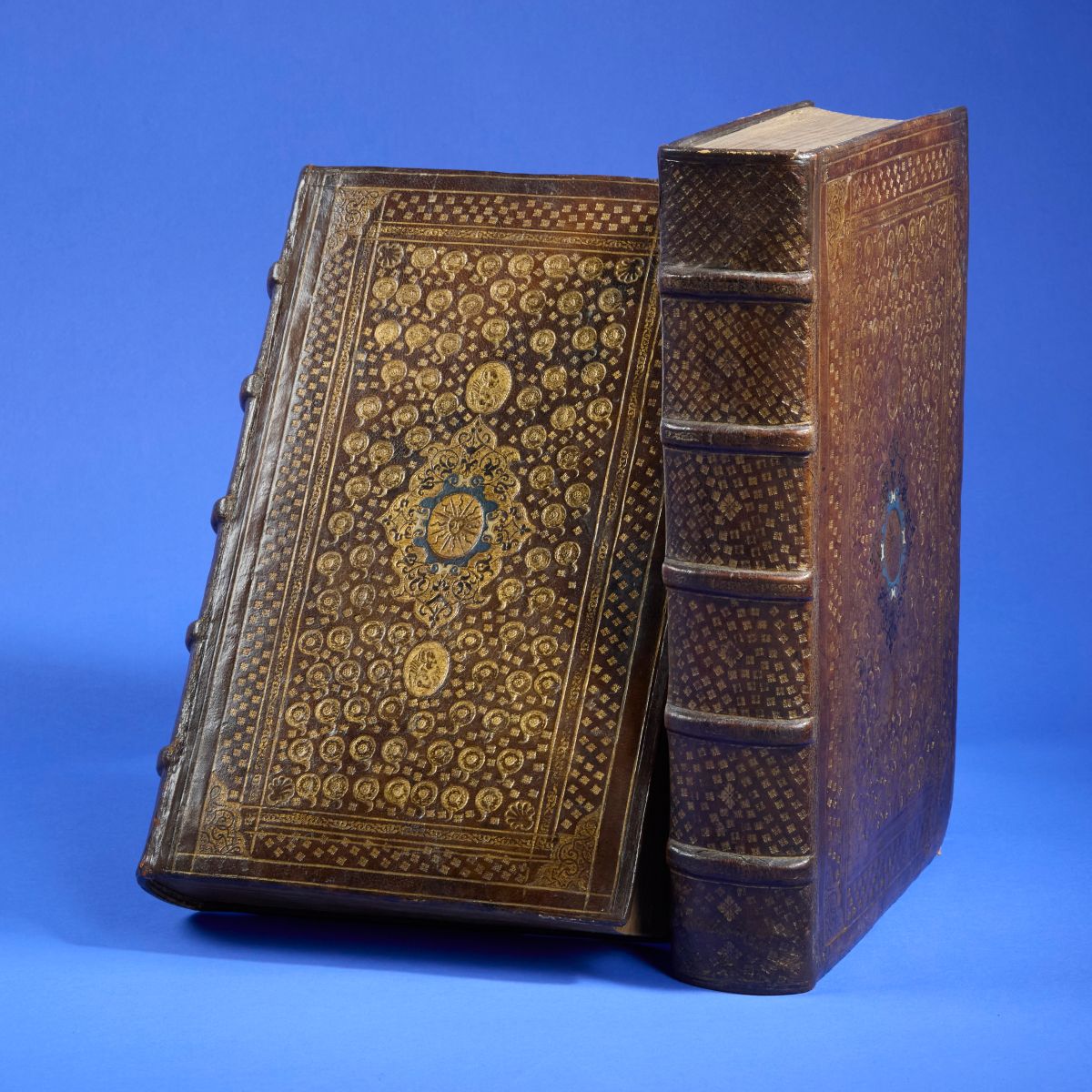
An exceptional copy bearing the emblems of Marguerite de Valois—daughter of Henry II and Catherine de’ Medici, sister of Kings Francis II, Charles IX, and Henry III, wife of Henry IV, Queen of France, and known as Queen Margot—from her personal library.
Queen Margot was regarded by her contemporaries, and later by historians and bibliophiles, as one of the most learned women of her time, having assembled one of the richest and most prestigious libraries of the era, rivaling those of her brothers or the King.
According to Quentin-Bauchard, author of *Femmes bibliophiles de France*, she was “the woman who shone most brilliantly through this strange century, after Diane de Poitiers.”
As Brantôme notes, “she was very eager to acquire all the beautiful new books being published, whether in sacred or secular literature.”
In his 2017 inventory (with a 2021 addendum), Nicolas Ducimetière lists 26 works identified to date as coming from Queen Margot’s library. They all appear to follow the same design style, known as “iron in the sun,” featuring framing fillets, scallops in the spandrels, and a central radiant sun—sometimes smiling, sometimes adorned with an eye. However, Marie-Noëlle Baudouin Matuszek describes another type: “A second type of ornamentation is the scattered motif, consisting either of fleurs-de-lis, the queen’s cipher, or daisies (a single known occurrence, the *Recueil des prophéties de Sainte Brigide*).”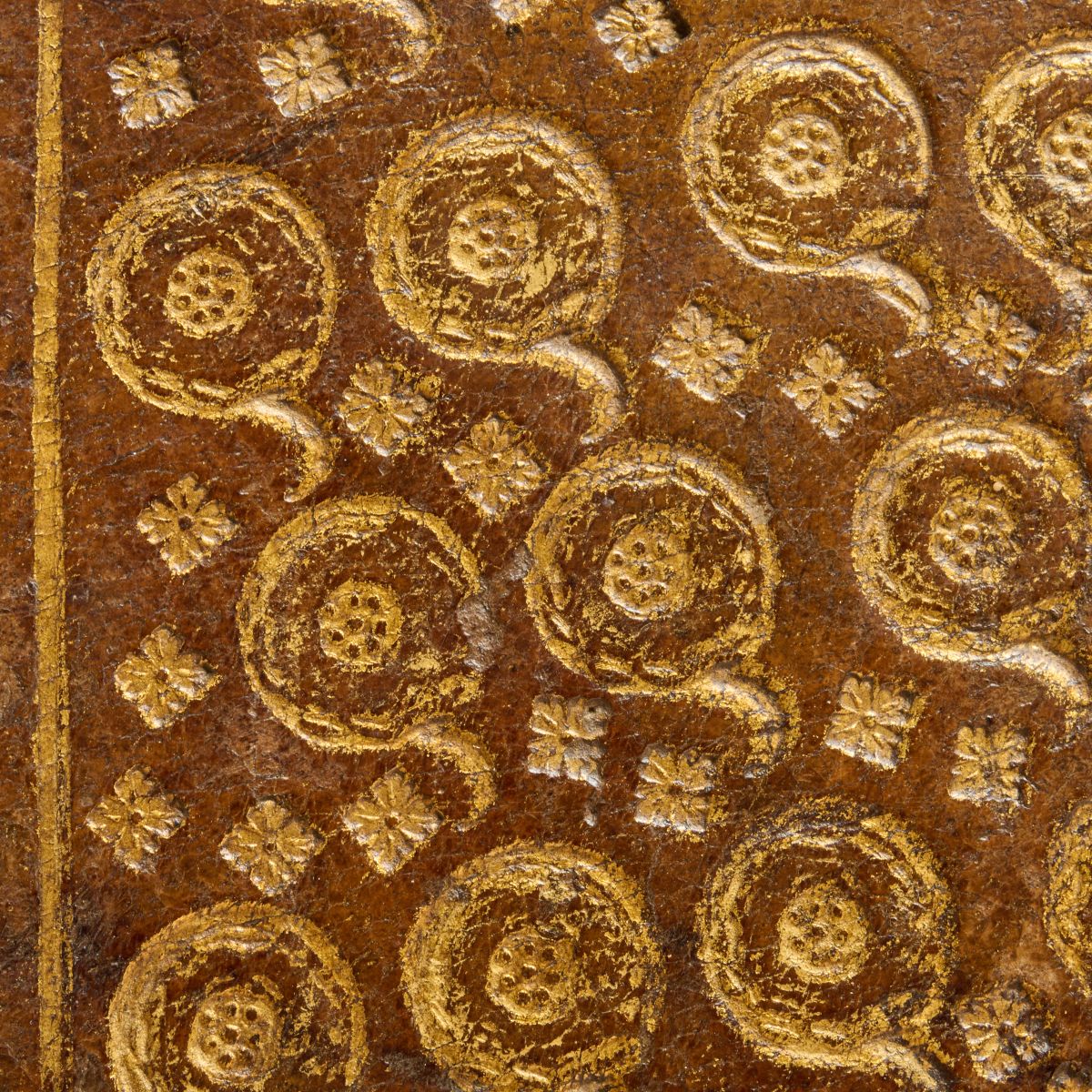
Our copy, decorated with a scattered pattern of daisies, is therefore one of only two currently identified among the surviving works. The daisy-shaped metal stamp is itself extremely rare, but can be found, for example, as the central ornament of the panels on the copy of Valeriano’s *Commentaires hiéroglyphiques* held at the Melun Municipal Library.
The binding is all the more remarkable in that it combines many of the major decorative features of 16th-century luxury bookbindings, namely azure backgrounds, scattered motifs, portraits, medallions, and wax highlights.
Contemporary full brown morocco binding; the covers are very richly decorated; the front cover features a design of daisies in a scrollwork pattern with fleurons, medallions depicting a profile portrait of Marguerite of Navarre framing a central medallion highlighted with white and blue wax and surrounded by black wax scrollwork on an azure background, depicting a radiant sun, scallops in the spandrels, a frame of gilded fillets, friezes of fleurons, a frieze of scrollwork, and azure ironwork in the spandrels; the back cover features a similar design, with a scattering of fleurons only, the central medallion framed by fermesses and featuring the gilded Chain of Navarre on a red background, the back adorned with five ribs, the panels filled with fleurons and a central fleuron, the ribs highlighted, all edges gilded. Ex-libris of Josy Mazodier and “ex-musaeo L. Double.”
10,000 / 20,000 €
PRIVATE EXHIBITION
By appointment
PUBLIC EXHIBITION
Wednesday, October 29, from 9:30 a.m. to 6:00 p.m.
Saint-Cloud Auction House 3 Boulevard de la République 92210 SAINT CLOUD
INFORMATION
contact@lefloch-drouot.fr - 01 46 02 20 15
AUCTION
Thursday, October 30, 2025, at 2:00 p.m.
AUCTION EXPERTS
Mr. Nicolas Asvisio
Galileo and the Church: Mersenne’s Dilemma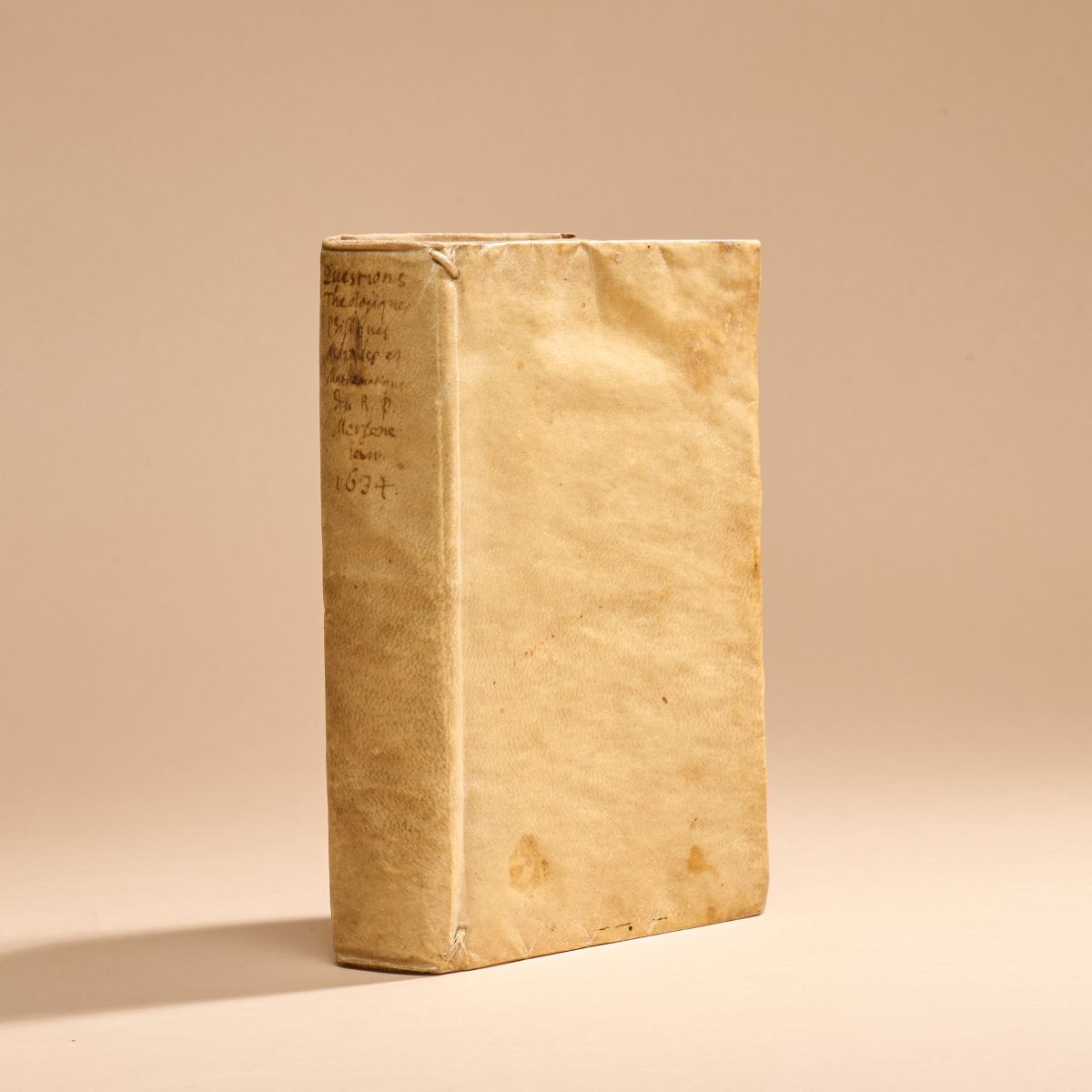
Marin Mersenne, a member of the Order of the Minims, was one of the most important figures in the dissemination of new scientific ideas in the 17th century and one of the first defenders of Galileo’s discoveries. Nicknamed “the secretary-general of scholarly Europe,” he maintained a rich correspondence with Europe’s leading scientists. Close to Descartes, Gassendi, and Hobbes, he conducted numerous experiments himself in various fields and, notably, arrived at the formulation of the laws of falling bodies at the same time as Galileo.
The Theological Questions cover a wide range of topics, including the fall of bodies (Question IV), the determination of longitude at sea (Question XII), perpetual motion (Question XV), the squaring of the circle (Question XVI), astrology (Question XX), the properties of light (Question XXI), the transparency of crystals (Question XXIV), the qualities of heat and cold (Question XXV), magnetism (Question XXVII), religion and alchemy (Question XXVIII), sunspots (Question XXIX). Nevertheless, as John Lewis points out, “it was in his defense of Galileo that he [Mersenne] became best known.”
Despite obtaining the king’s privilege on June 20, 1634, for his work, the timing of Galileo’s trial and the reactions of the scientific and religious communities to that event prompted Father Mersenne to amend his own work. As he states in a letter to Fabri de Peiresc dated July 28, 1634:
“I am sending you the three short treatises I have written, so that you may find some enjoyment in them amid your more serious pursuits. I ask you to send to Mr. Doni, when you have the opportunity, those in which his name appears. Among them, the *Questions morales*, *mathématiques*, etc., differ from yours, because there are irrefutable arguments for the motion of the Earth, for which I had cited the Cardinals’ sentence as a remedy, as you will see. But since I was told there had been some commotion among the doctors of the Sorbonne because of the reasons I did not refute, I have removed all the questions about which they might take offense, and have included others that you will see in the book for Mr. Doni, which will be more suitable for Rome.”
Mersenne completely replaces four of his questions, which deal directly with Galileo’s discoveries. Question 34 , “What reasons are there to prove and to demonstrate the Earth’s rotation on its axis within a twenty-four-hour period? ”; Question 37: “What reasons might one have for believing that the Earth moves around the Sun, which is placed at the center of the world? ”, and Questions 44 and 45 on the motion of the Earth, which draw on Galileo’s first and second treatises. The text then continues with the publication of the “Sentence against Galileo, and against his Dialogues on the Motion of the Earth.”
Marin Mersenne, however, never seems to have been entirely convinced of the heliocentric theory. He was initially a fervent opponent before gradually revising his position, giving increasing credence to Galileo’s theories, while acknowledging the legitimacy of his condemnation. Although he appears to have adopted a conception of the solar system similar to that of Tycho Brahe, the quality of Galileo’s findings compelled him to defend Galileo as a man of science.
According to John Lewis, author of the seminal article on this work, copies not “self-censored” by Mersenne are extremely rare. The three copies at the Bibliothèque Nationale de France are expurgated versions, as are the copies in Italian public collections, and only two copies at the Bibliothèque de l’Arsenal contain the original text. In addition to these copies, there appears to be one at the Bibliothèque des Facultés Loyola, also in its first version. In the three letters from Pierre Bérès accompanying the work, he mentions only one unexpurgated copy, the one at the Bibliothèque de l’Institut.
According to our research, none of the copies previously offered at public auctions has been described as containing the original text. One of the two copies at the Bibliothèque de l’Arsenal is noted by Lewis as having the additional distinction of containing the first version of the text, followed by the expurgated version.
Our copy is now the second known to possess this feature. The main body of the text contains the first version of Mersenne’s text, followed by 17 folios containing the expurgated version (passages in these additional folios that do not contain the relevant dialogues are crossed out with ink). This is a copy personally given by the author to one of his close associates, who remains unidentified, as attested by the handwritten note on the flyleaf: “This book was given to me by the Reverend Father Mersenne, to whom I have devoted all manner of services. I began reading it on the 5th day of January 1635.”
It encapsulates in a single volume all the tension that stirred scientific and religious circles at the time of Galileo’s discoveries, as well as the inner conflict of a religious man who was nonetheless convinced of the ability of physical laws—supported by experimental demonstrations—to explain part of the reality of the world.
3 volumes in one in-8 volume, a first edition of the first defense in French of Galileo’s works—published just one year after his trial—and of the translation of Galileo’s *Mechanics*.
An exceptional copy, given directly by Mersenne to its first owner, containing both versions of the text (the original and the expurgated version).
Contemporary full vellum binding, with a plain spine bearing the title.
Ex-libris by Josy Mazodier.
Three typewritten letters signed by Pierre Bérès accompany the volume, concerning a potential expert appraisal that likely never took place.
10,000 / 20,000 €
PRIVATE EXHIBITION
By appointment
PUBLIC VIEWING
Wednesday, October 29, from 9:30 a.m. to 6:00 p.m.
Saint-Cloud Auction House, 3 Boulevard de la République, 92210 SAINT CLOUD
INFORMATION
www.lefloch-drouot.fr contact@lefloch-drouot.fr 01 46 02 20 15AUCTION
Thursday, October 30, 2025, at 2:00 p.m.
APPRAISER
Mr. Nicolas Asvisio
Eva JOSPIN
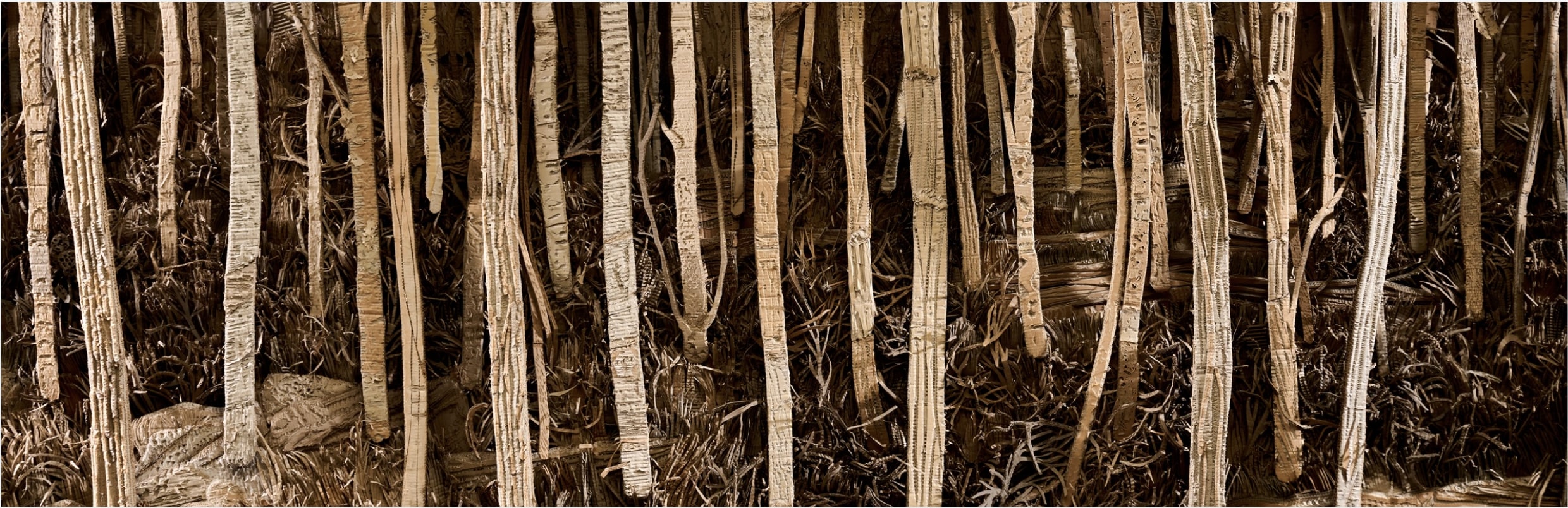
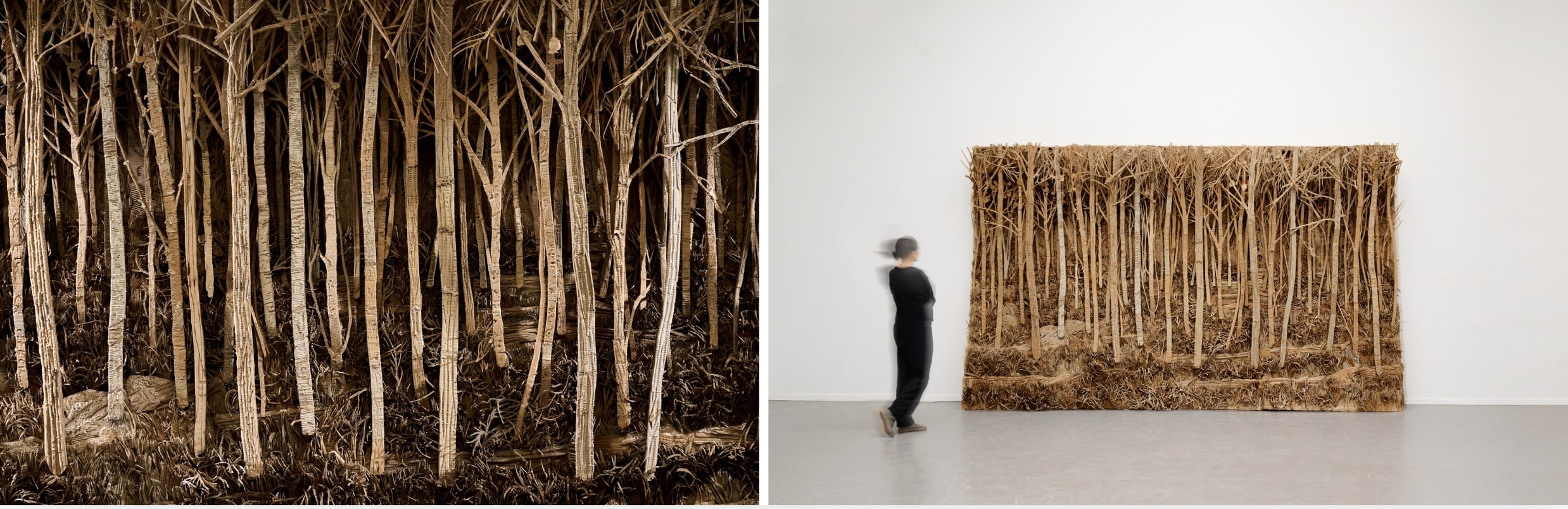
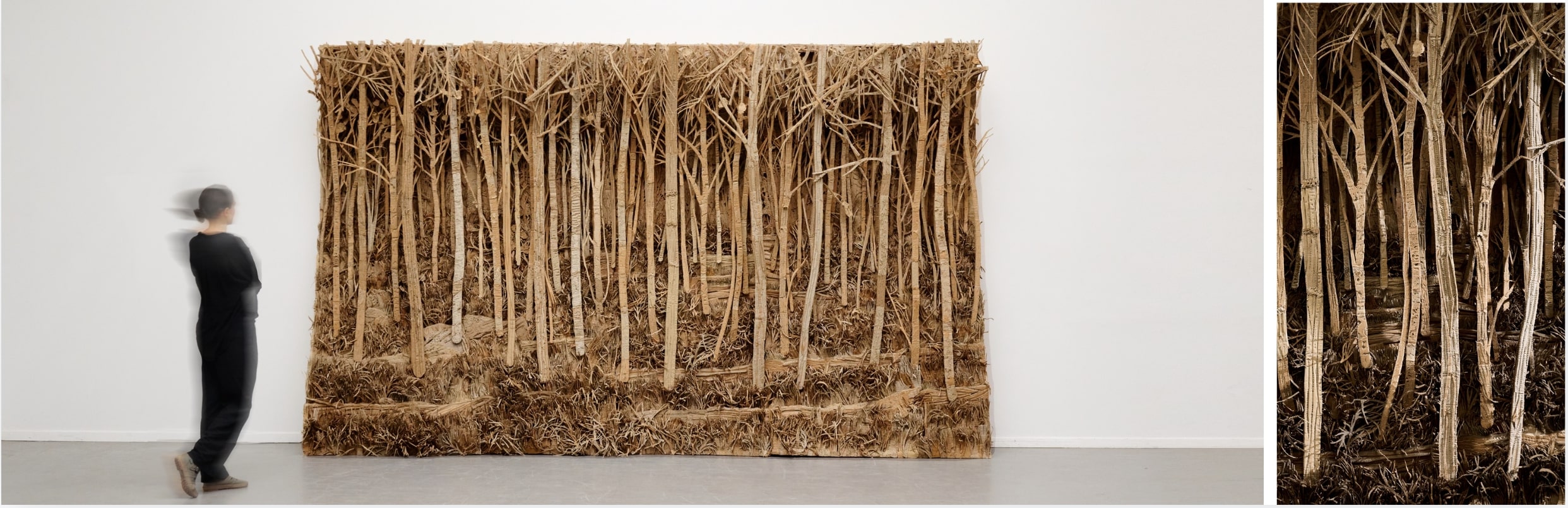
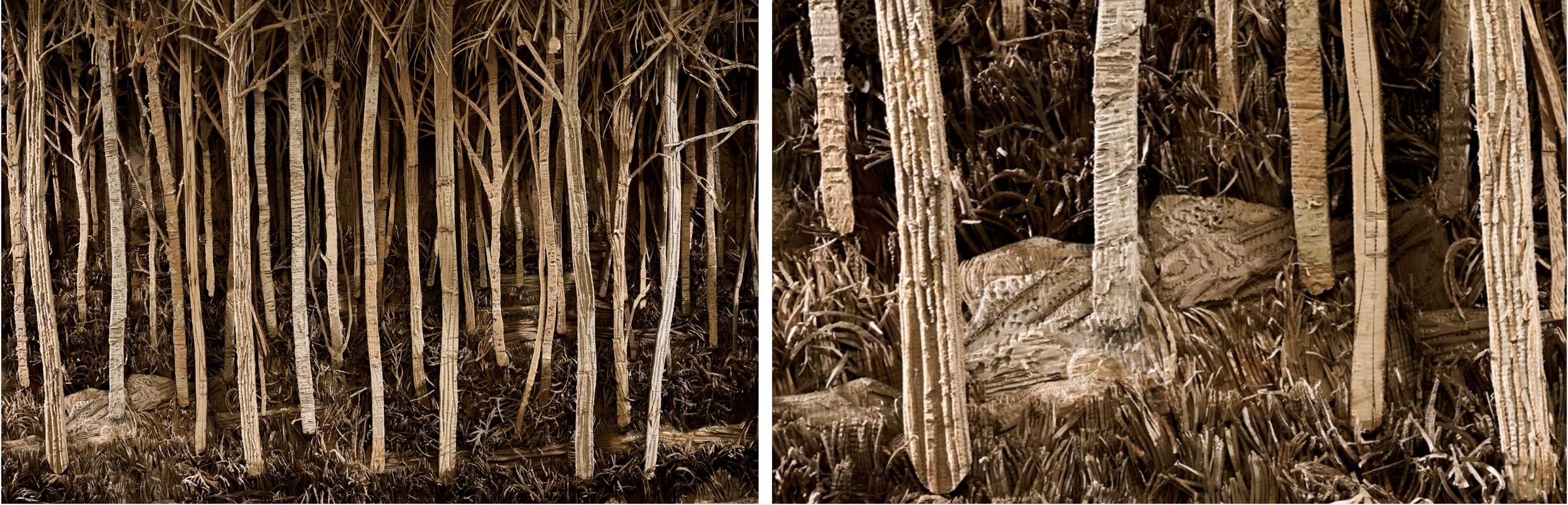
Le Floc'h Auction House is delighted to present a work by visual artist Eva JOSPIN. Measuring 4.45 meters long by 2.75 meters high, *La Forêt*, created in 2014, will be featured in the auction on Sunday, December 1, 2024, at 2:00 p.m. at the Saint-Cloud auction house.

EVA JOSPIN

HER WORK

HER MEDIUM

LA FORET, 2014
View the lot
Download the press release
Download the press release
La Gazette Drouot features it!
Photo 1 - picture 1
Photo 2 - picture 2: zoom
Photo 3 - picture 3: detail
Photo 4 - picture 4: the artwork
©Le Floc'h Auction House, 2024.
For more information:
Isaure BODARD, press relations - 01 46 02 20 15 - contact@lefloch-drouot.fr
Public exhibitions:
Friday, November 29, and Saturday, November 30, from 11 a.m. to 6 p.m.
And Sunday, December 1, from 11 a.m. to 12 p .m.
Previews available upon request.
Press briefing: Monday, November 18, at 9:30 a.m. – breakfast starting at 9:00 a.m. at 3 Boulevard de la République – 92210 Saint-Cloud
JEAN ROYERE

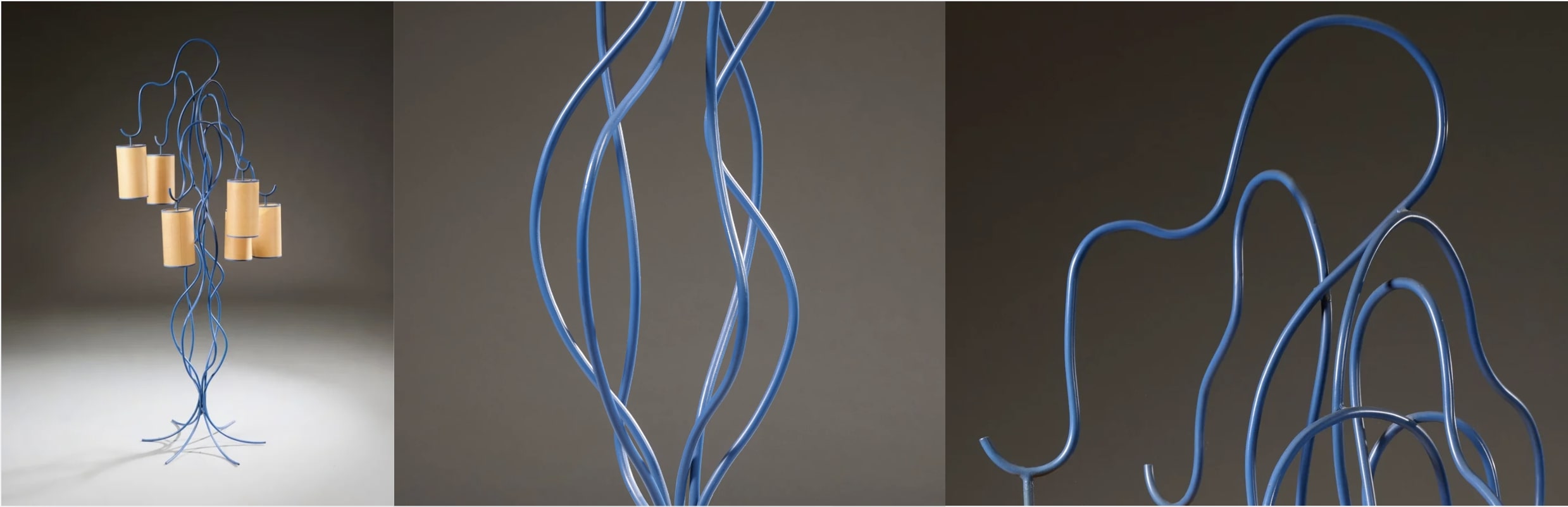
Jean ROYÈRE (1902–1981).
“Liane” floor lamp with six light arms in original blue-lacquered metal, as indicated on the invoice; original cylindrical bulb covers (the stem is unsoldered at the top, and there are a few stains on the bulb covers). Height: 181 cm. Circa 1959.
Estimate: €100,000–120,000
Sold for: 1,300,000 € (excluding fees)
Appraisal conducted by Mr. Jean-Marc MAURY - 06 85 30 36 66 - maury.expert@wanadoo.fr
Bibliography:
Jacques Lacoste and Patrick Seguin, *Jean Royère, Vol. 2*, Éditions, Galerie Jacques Lacoste and Galerie Patrick Seguin, Paris, 2012; a similar model is shown on p. 35; - “Jean Royère: Decorator in Paris,” exhibition catalog from the Musée des Arts Décoratifs in Paris, October 8, 1999 – January 30, 2000, Éditions Norma, 1999, similar model shown on pp. 26, 78, and 166; - Axel de Heeckeren, *Jean Royère* exhibition catalog, on view Wednesday, April 17, through Monday, May 20, 1985, Paris, 1985, Éditions A de Heeckeren, 1985, similar model, fig. 49; - Axel de Heeckeren, “Jean Royère,” exhibition at Galerie Jansen, Paris, Wednesday, April 17, through Monday, May 20, 1985, Éditions A de Heeckeren, 1985, similar model, ill. 49; - Pierre-Emmanuel Martin-Vivier and Jacques Lacoste, “Jean Royère,” Éditions Norma, Paris, 2002, similar model, ill. pp. 261, 266, and 270 – Jacques Lacoste, “Jean Royère: Line, Form, Color,” presented at the Galerie Jacques Lacoste in collaboration with the Galerie Patrick Seguin, Éditions Galerie Jacques Lacoste, similar model shown on pp. 11 and 206. Exhibition: Société des Artistes Décorateurs, Paris 1959.
RENAUD & ARMIDE
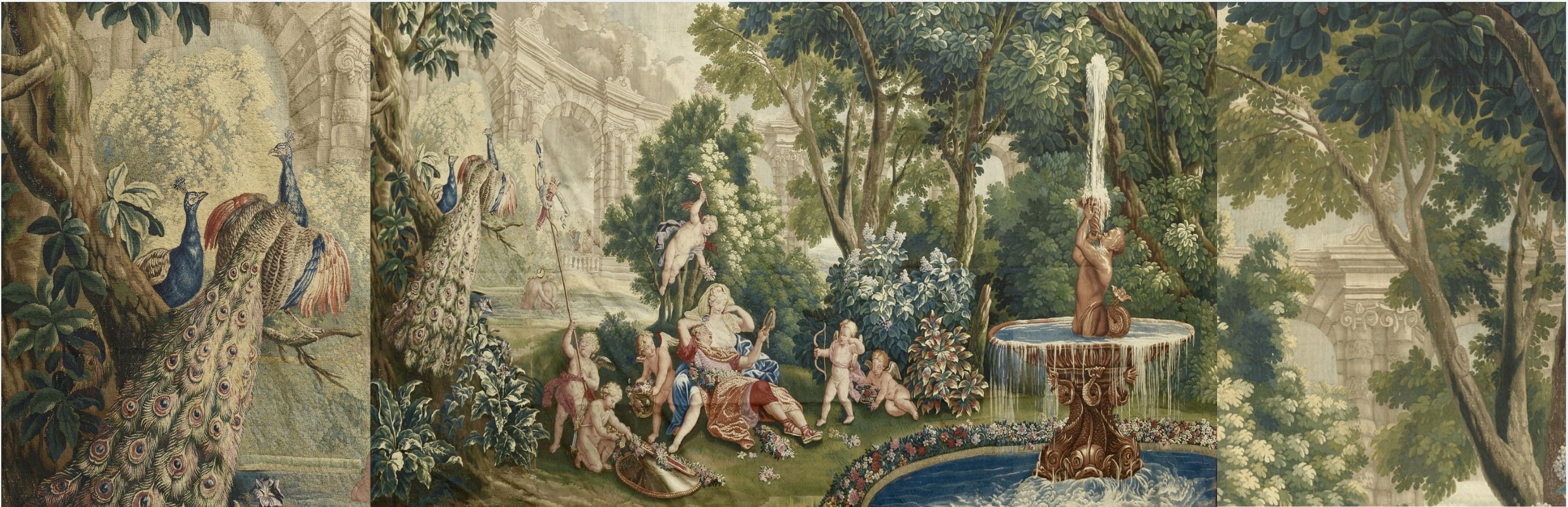
Gobelins tapestry from the “Metamorphoses” series
Has the copy woven for the king been identified?

The “Metamorphoses” tapestry series, woven at the Gobelins Manufactory, was a great commercial success and was produced in several copies during the 18th century based on designs updated at the very beginning of the century. Only one tapestry was woven for the king; it was purchased by Madame de Pompadour before its whereabouts became unknown.
Until now, none of the known tapestries matched the dimensions of the one produced for the king. The panel depicting Renaud and Armide, which will be offered for sale in Saint-Cloud on Sunday, October 13, 2024, is missing its border. Assuming borders of 42 cm, the dimensions of our piece match those recorded in the archives for the royal piece (give or take a few centimeters). Furthermore, our piece was woven on a low-warp loom, just like the royal piece. Thus, in all likelihood, it is indeed the tapestry that was commissioned by the king and later belonged to Madame de Pompadour that will go up for auction on Sunday, October 13, in Saint-Cloud, with Master Guillaume Le Floc’h presiding over the auction.